BLOG
What Is AI Search Optimization? A Complete Guide to AEO, GEO & LLM SEO
Search has quietly changed shape. A buyer types a question, reads a finished answer, and moves on, often without visiting a single website. SparkToro’s January to April 2026 clickstream study found that 68.01% of U.S. Google searches ended without a click to the open web. If your visibility plan rests on blue-link rankings alone, a […]
September 19, 2026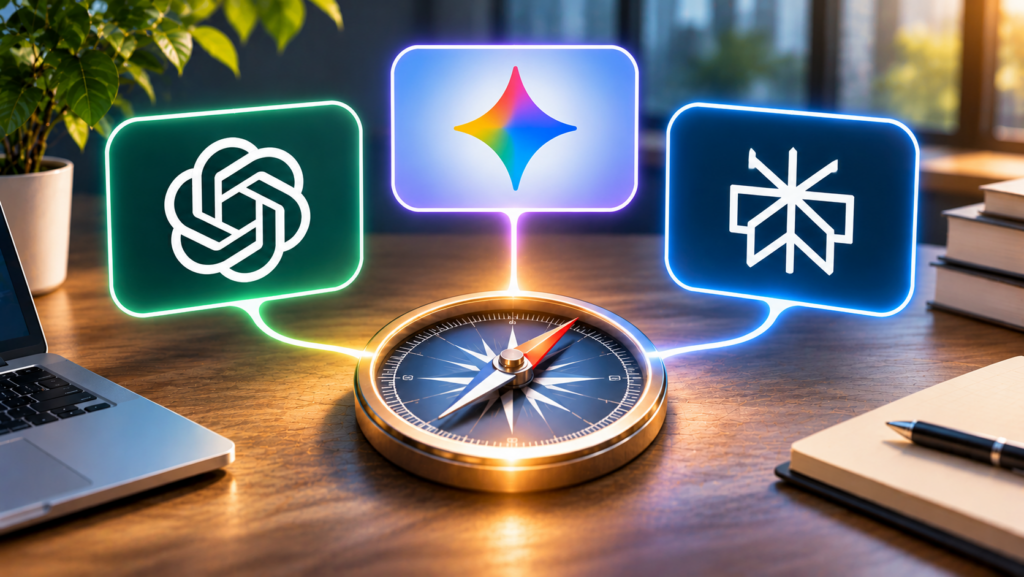
Search has quietly changed shape. A buyer types a question, reads a finished answer, and moves on, often without visiting a single website. SparkToro’s January to April 2026 clickstream study found that 68.01% of U.S. Google searches ended without a click to the open web. If your visibility plan rests on blue-link rankings alone, a big slice of your audience may never meet your brand.
After proper search, we can say this is the most practical shift we have seen. Here is how it works and what to do about it.
What Is AI Search Optimization?
It is the practice of shaping your content, brand entity, and technical signals so that AI platforms understand, trust, and quote you in the answers they generate. Classic search engine optimization chases a ranking position. This work chases a mention.
The platforms involved include Google’s AI Overviews and AI Mode, ChatGPT, Perplexity, and Gemini. They look different on the surface, yet they share one trait: they pull passages from many reliable sources and compose a single response.
Why Does AI Search Optimization Matter in 2026?
The numbers explain the urgency better than any opinion could:
68.01% of U.S. Google searches ended without a click to the open web between January and April 2026 (SparkToro).
58% is how much AI summaries reduced click-through for position-one pages, based on Ahrefs’ analysis of 300,000 keywords.
37.9% of URLs cited in Google’s AI summaries also ranked in the top 10, down from roughly 76% in July 2025 (Ahrefs, March 2026, across 863,000 keyword results and 4 million cited URLs).
20%+ of Google searches now trigger an AI summary, according to Ahrefs trigger data cited by SparkToro.
Read together, the message is simple. Ranking still helps, but it no longer guarantees a place in the answer. Being quotable does.
How AI Search Is Changing the Customer Journey
The traditional customer journey often started with a Google search, followed by visits to multiple websites before making a decision. AI-powered search is changing that process by bringing research, comparisons, and recommendations into a single conversation.
Buyers can now ask detailed questions, compare service providers, and explore solutions without opening multiple tabs. For businesses, this creates a new challenge: being visible during the research phase, even when potential customers never visit their website.
AI search optimization helps bridge that gap by making brand information accessible, relevant, and trustworthy across AI-driven discovery platforms.
Decoding the Short Terms
Agencies often toss these labels around as if they were rivals. They are not. They are layers of one discipline.
| Term | Type | What it focuses on |
| Answer engine optimization (AEO) | Answer-focused | Structuring pages so they become the direct response in snippets, voice results, and AI answers |
| Generative engine optimization (GEO) | Citation-focused | Earning mentions in responses that models synthesize from many sources |
| LLM SEO | Model-focused | Keeping brand entity consistent across the sources language models retrieve and learn from |
| AI SEO | Umbrella term | Traditional optimization combined with every layer above |
| AI citations | Outcome | The named or linked sources displayed beside a generated answer |
| Generative search | Experience | Results composed by a model rather than listed as ten links |
At Webtage, we treat these as one connected program, because a buyer never cares which label produced the answer.
How AI Platforms Decide What to Quote
Here is the part most guides skip. Answer engines rarely rely on one page. Google has confirmed that its system performs query fan-out, splitting a question into related sub-questions and gathering passages for each. Pages that surface repeatedly across those sub-questions earn the mention. Three signals carry the most weight in our experience:
Passage-level clarity. A paragraph that answers one question completely is easier to lift than a long, winding page.
Entity consistency. Your name, services, locations, and credentials should read the same across your site, profiles, and directories.
Corroboration. Reviews, independent mentions, and video give models a reason to trust you. Ahrefs Brand Radar data shows YouTube is the most cited domain in Google’s AI summaries, up 34% in six months.
Why E-E-A-T Matters for AI Search Visibility
Experience, Expertise, Authoritativeness, and Trustworthiness (E-E-A-T) remain important principles for creating content that deserves visibility. Although E-E-A-T is not a direct ranking factor or a guaranteed way to earn AI citations, it provides a useful framework for building credible content.
Businesses can demonstrate expertise through original research, expert contributions, detailed case studies, and transparent sourcing. In industries such as healthcare and B2B technology, where accuracy and credibility influence purchasing decisions, these practices become especially valuable.
The goal is to create information that both customers and AI-powered search systems can evaluate and verify.
A Platform-by-Platform Playbook
Each platform rewards slightly different habits:
Google AI Overviews optimization: Answer related sub-questions on one authoritative page, keep structured data accurate, and make sure your Business Profile matches your website.
ChatGPT SEO: Allow OpenAI’s search crawler in your robots.txt file, keep pages fast and indexable, and build third-party mentions the model can corroborate.
Perplexity SEO: Publish fresh, factual pages with visible dates, named authors, and clear sourcing, since Perplexity displays its citations prominently.
Gemini SEO: Strengthen the Google ecosystem around your brand, including your BusinessProfile, YouTube channel, and schema-rich pages.
A Five-Step AI Visibility Optimization Framework
This is the sequence we follow with clients:
Audit. Run 30 to 50 real buyer questions through each platform and log who gets named. That becomes your baseline. You may also use subscription-based tools, such as SEMrush, to see your AI Search score, prompts that you are being cited for, and what opportunities are available for improved AI search visibility.
Clarify your entities. Align organization details everywhere, add Organization and Person schema, and publish proper author bios.
Restructure content. Lead with the answer, use question-style subheadings, and add tables where comparisons help.
Earn corroboration. Pursue reviews, directory listings, partnerships, and short videos.
Measure. Track AI referrals, branded search demand, and assisted conversions through marketing analytics built on privacy-first tracking.
Treat AI search marketing as an ongoing program rather than a one-time project. Models and interfaces change often, so a quarterly refresh of your question list keeps the work honest.
Common AI Search Optimization Mistakes to Avoid
One of the biggest mistakes businesses make is treating AI search optimization as a separate activity from traditional SEO. Publishing AI-generated content at scale, adding unnecessary schema markup, or repeating keywords without providing meaningful answers will not automatically improve AI visibility.
Another common oversight is ignoring outdated business information across websites, directories, and third-party platforms. Instead of chasing shortcuts, businesses should focus on maintaining technically accessible pages, publishing accurate and helpful content, and strengthening their online reputation.
Regular content audits and AI visibility monitoring can help identify gaps before they affect how potential customers discover and evaluate a brand.
Where Webtage Fits
Webtage is an analytics-first agency serving healthcare, B2B, and nonprofit organizations from Naperville and across Chicagoland. Our AI search optimization services sit alongside our SEO, content marketing, and analytics work, so strategy, pages, and measurement stay connected.
Want to see the thinking in practice?
Read our guide on getting your business noticed by ChatGPT, or
explore the Pilates studio growth case study where search and social worked side by side.
Frequently Asked Questions
Does this replace traditional SEO?
No, it builds on it. Pages still need to be crawlable, fast, and authoritative. The new layer makes them quotable.
How long before results show up?
Early movement, such as being named for a few niche questions, can appear within a few months. Broader presence grows with steady publishing and corroboration.
Which platform should we start with?
Start where your buyers already are. For most clients that means Google’s summaries first, since the audience is largest, followed by ChatGPT and Perplexity.
Can a small local business compete?
Yes. Ahrefs found that citations come from well beyond the top 10, so a focused, well-structured local page with consistent business details can earn a mention.
How do we measure success?
We track your presence across a fixed set of buyer questions, referral traffic from AI platforms, branded search growth, and qualified leads.
Summing Up,
Search is no longer only a list of links. It is a conversation, and the businesses that make their expertise easy to understand, easy to quote, and easy to verify will be the names that conversation includes.
Begin with an audit of the questions your customers actually ask, fix the foundations, and build from there. If you would like a partner for the journey, talk to the Webtage team.

Contact us for a FREE 30 Minute Consultation
Schedule your free consultation today to discuss how our digital strategies can benefit your organization.
Get in Touch